
Recently, I was invited to give a keynote talk at the annual International History and Diplomacy in the Twentieth Century conference themed around ‘Power Games’: Sports and Diplomacy in Global Contexts, at Liverpool John Moores University. A huge thank you to Dan, Dean and Jan for the invite. It challenged me to step up from a panel presentation to a keynote presentation, something I had not done before.
In the following piece, I will reflect on my talk and bring in other contributions. It will give you a very swift overview of how rich the cavern of sports and diplomacy research and debate is. Please do reach out and connect if you want to discuss anything further. Plus, at the end, I will shout out some pieces to access and events to consider engaging with.
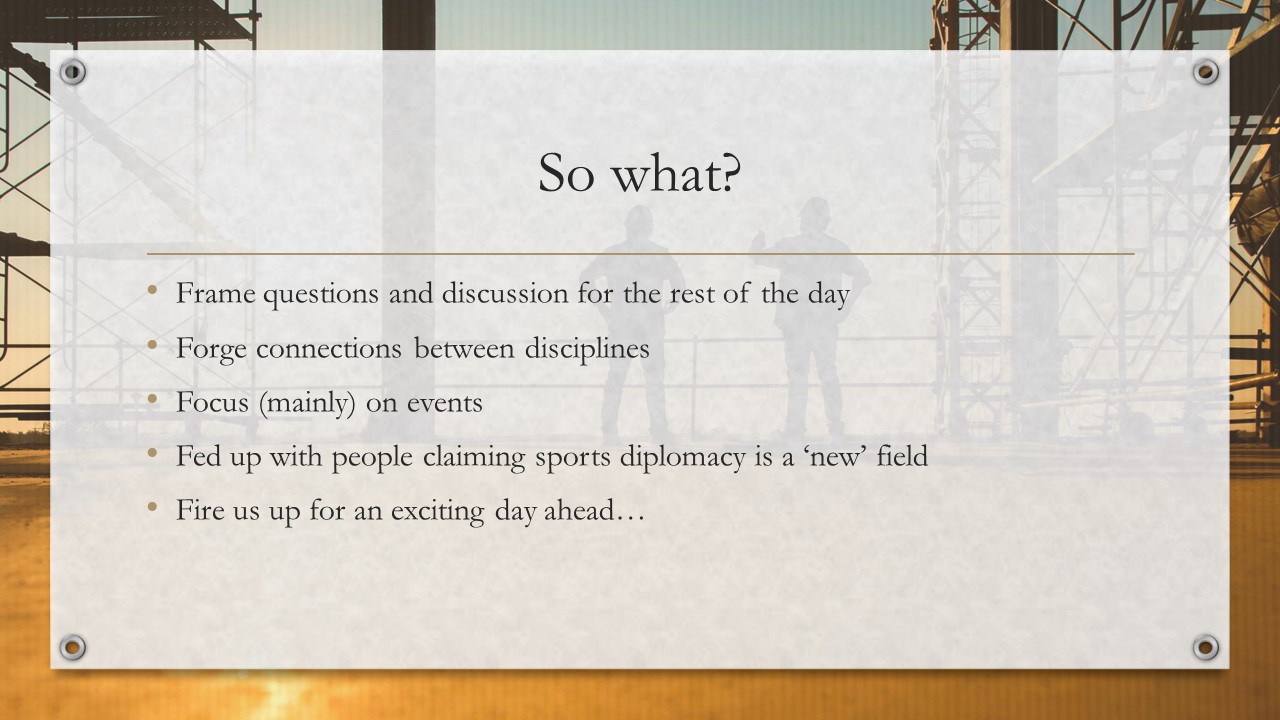
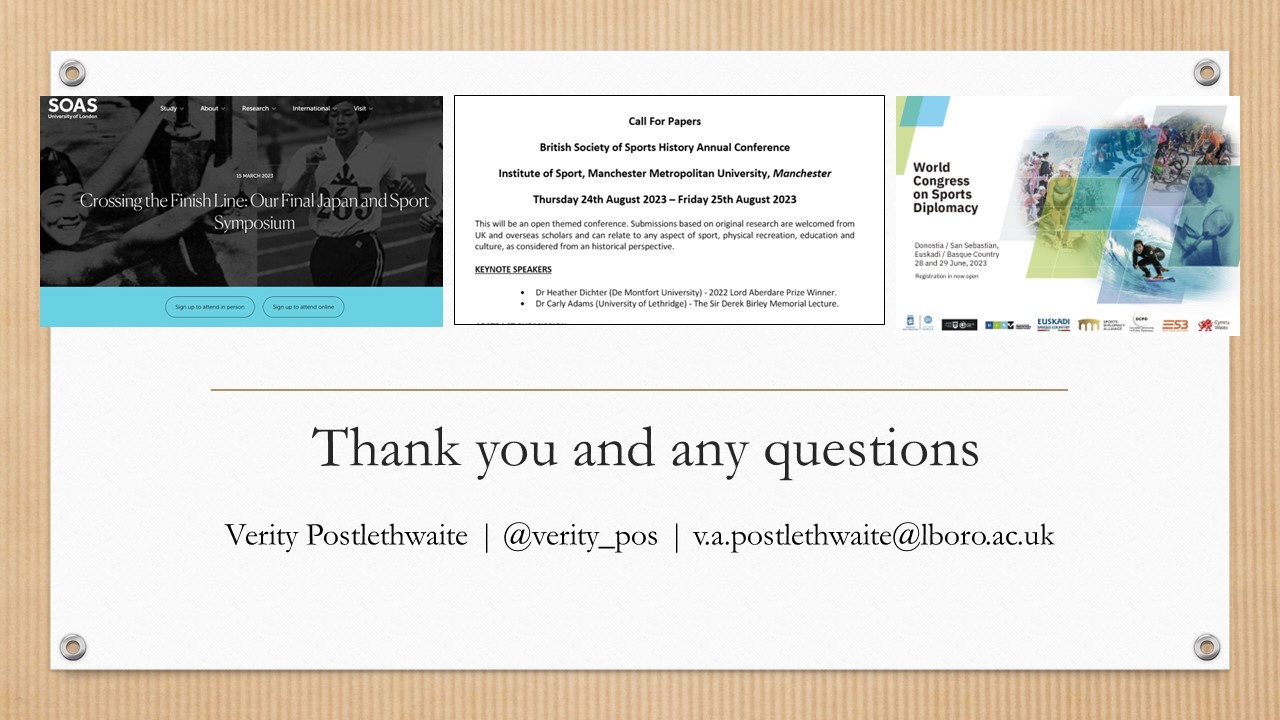
Another huge thank you to a couple of wise mentors who guided me through the process of putting together a keynote talk, in particular the signpost to the TED resource. I used the keynote slot to frame some empirical, methodological and theoretical challenges and opportunities of researching sports diplomacy, then the latter portion to illustrate these through a spotlight on the 2023 FIFA Women’s World Cup (a selection of slides here).




For the remainder of the day, we heard from a range of voices about how sports and/or diplomatic tenants featured in their research:
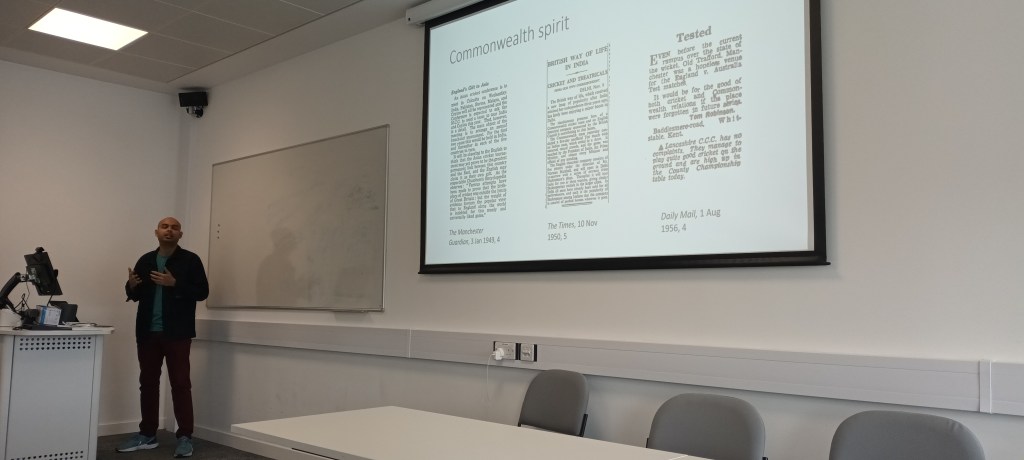
Souvik Naha (University of Glasgow)
Cricket diplomacy and the postcolonial British world, 1940s-50s
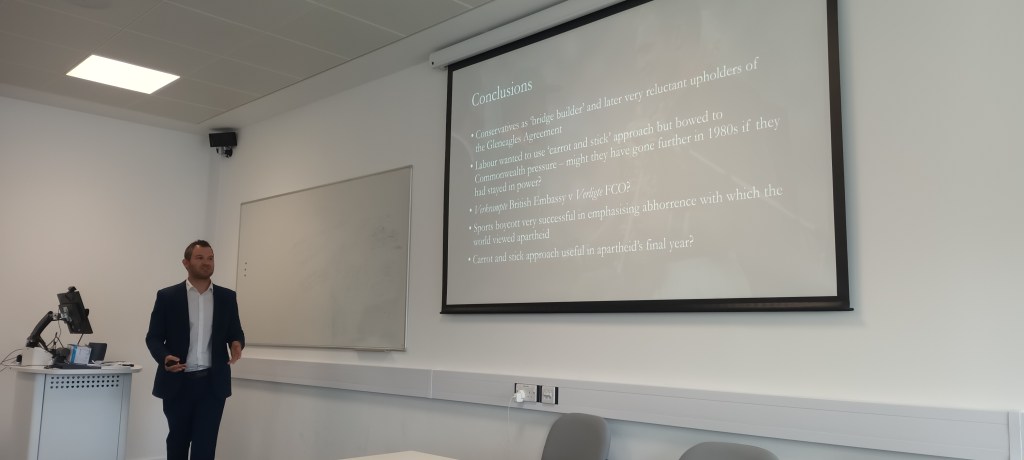
Dan Feather (Liverpool John Moores University)
‘Bridge building or ‘carrot and stick’: British government policy towards sporting contact with South Africa, 1960 to 1994
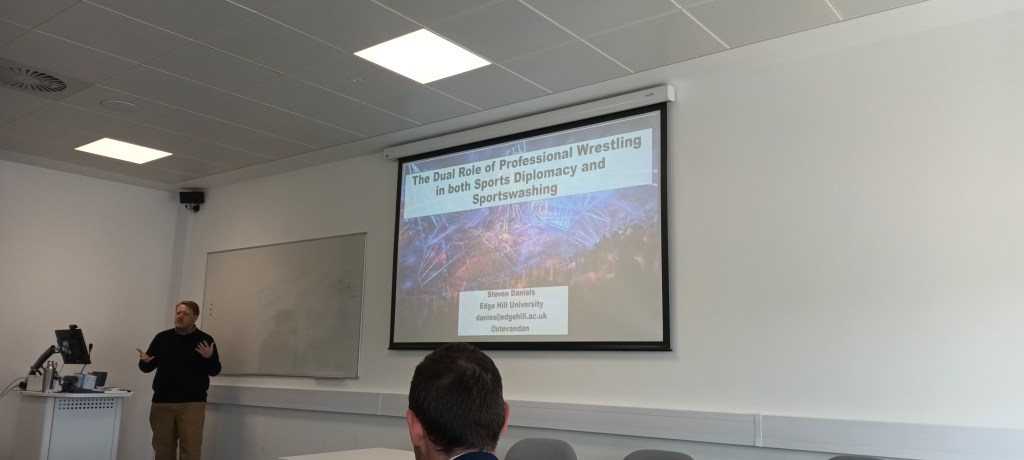
Steven Daniels (Edge Hill University)
The Dual Role of Professional Wrestling in both Sports Diplomacy and Sportswashing
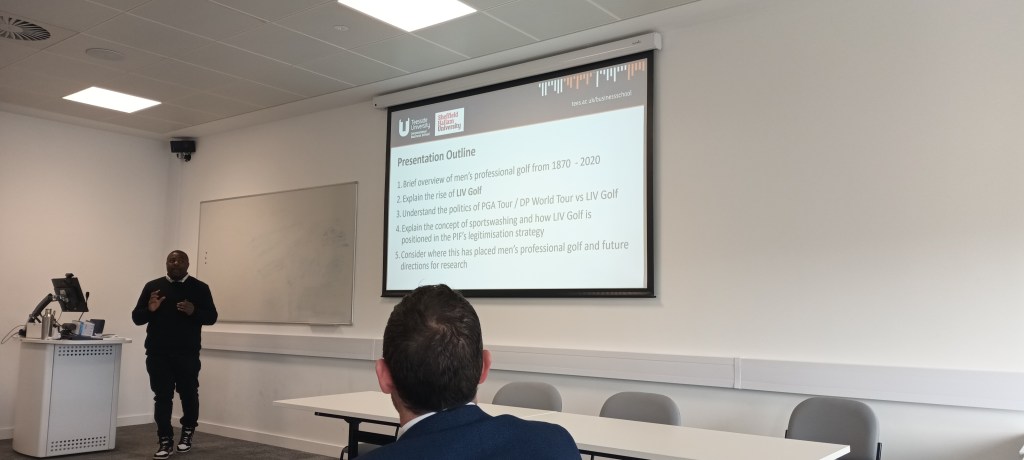
Leon Davis (Teesside University) and Dan Plumley (Sheffield Hallam University)
Overt ‘sportswashing’? LIV Golf and Saudi Arabia’s direct push for legitimacy in elite sport
J Simon Rofe (University of Leeds) and Nicola McCullough
Talking sport diplomacy: Changing minds?’ An oral history approach to understanding FIFA Men’s World Cup 2022 Qatar
David M. Webber (Southampton Solent University)
‘Rentier capitalism’, ‘sportswashing’ and the political economy of English football
Jack Sugden (Liverpool John Moores University)
Assessing governance without government: A proposal for the United Nations Council of Sport Governance
Jan André Lee Ludvigsen (Liverpool John Moores University)
Looking back, looking forward: sport and politics in an ever-changing world



My notes on the talks themed around:
- You can approach sports and diplomacy in a very traditional manner and consider a nation-state’s motivation or actions for using sports to further its policy and goals. Excitingly, research on nation-states that use sports and diplomacy is growing in diversity… there are 193 Member States in the United Nations and 206 National Olympic Committees in the International Olympic Committee. Let’s encourage and support more work on all the different states and committees.
- History is an incredibly useful point of reference for many contemporary forms and examples of sports diplomacy. A number of the talks throughout the day mapped historical context or trends that still resonate with contemporary structures and agents.
- Coupled with this point about history, there were a couple of talks considering the ‘new’ aspects of sports and diplomacy. Including, non-traditional sports and bodies that are engaging with diplomacy, such as the LIV Golf League or professional wrestling bodies. Furthermore, there are contemporary modes of diplomatic activities through digital innovation, the use of contemporary currency, and new powerful voices in varying spaces that are stretching thinking on what diplomacy is.
- Finally, the ever-present problem of how to model, predict, and change sports diplomatic endeavours… there were a couple of presentations that talked of the future and what role the media, academic, sports industry, governmental, commercial or charitable organisations might have in the future. In a world with growing injustice and widening gaps of inequalities, this was one of the most inspiring threads throughout the day.
Where to now?
Well, there are some upcoming conferences, events, and digital spaces where sports, society and politics will be discussed. For example:
The Business and Development of Women’s Football Conference – https://www.linkedin.com/company/businessanddevelopmentwomensfootball/
Or one that happened a few weeks ago and the recording is available via YouTube, https://www.soas.ac.uk/about/event/crossing-finish-line-our-final-japan-and-sport-symposium
Funding opportunities, for example:
https://www.sportinhistory.org/categories/funding
https://olympics.com/ioc/olympic-studies-centre/research-grant-programmes
Further reading, based mostly on the speakers at the IHD conference this year, for example:
How men’s golf has been shaken by Saudi Arabia’s billion-dollar drive for legitimacy https://theconversation.com/how-mens-golf-has-been-shaken-by-saudi-arabias-billion-dollar-drive-for-legitimacy-193474
Critical reflections on the future of global sport governance in a post-Covid-19 world http://researchonline.ljmu.ac.uk/id/eprint/16566/
The diplomatic opportunities and challenges presented by international sports events: A snapshot from the 2023 FIFA Women’s World Cup https://www.sportanddev.org/latest/news/diplomatic-opportunities-and-challenges-presented-international-sports-events-snapshot
What do we know and understand about sports diplomacy? https://www.sportanddev.org/latest/news/what-do-we-know-and-understand-about-sports-diplomacy
VPos
 veritypostlethwaite.com